The $140,000 call nobody returned, and the $20,000 job we kept
I built an AI that reviews every phone call and flags the ones where money is slipping away. Here's what a miss costs, and what happens now that it's running.
Based on real calls the AI reviewed. Names, details and figures changed for privacy and illustration.
The business
The problem
The one that got away
Before the AI was running, a man called the scrap yard. He owned a fleet and wanted to move it. By his count, 50 semi-trucks.
He'd called the day before and left a message. Nobody called back. So he called again, and the person answering could only take another message.
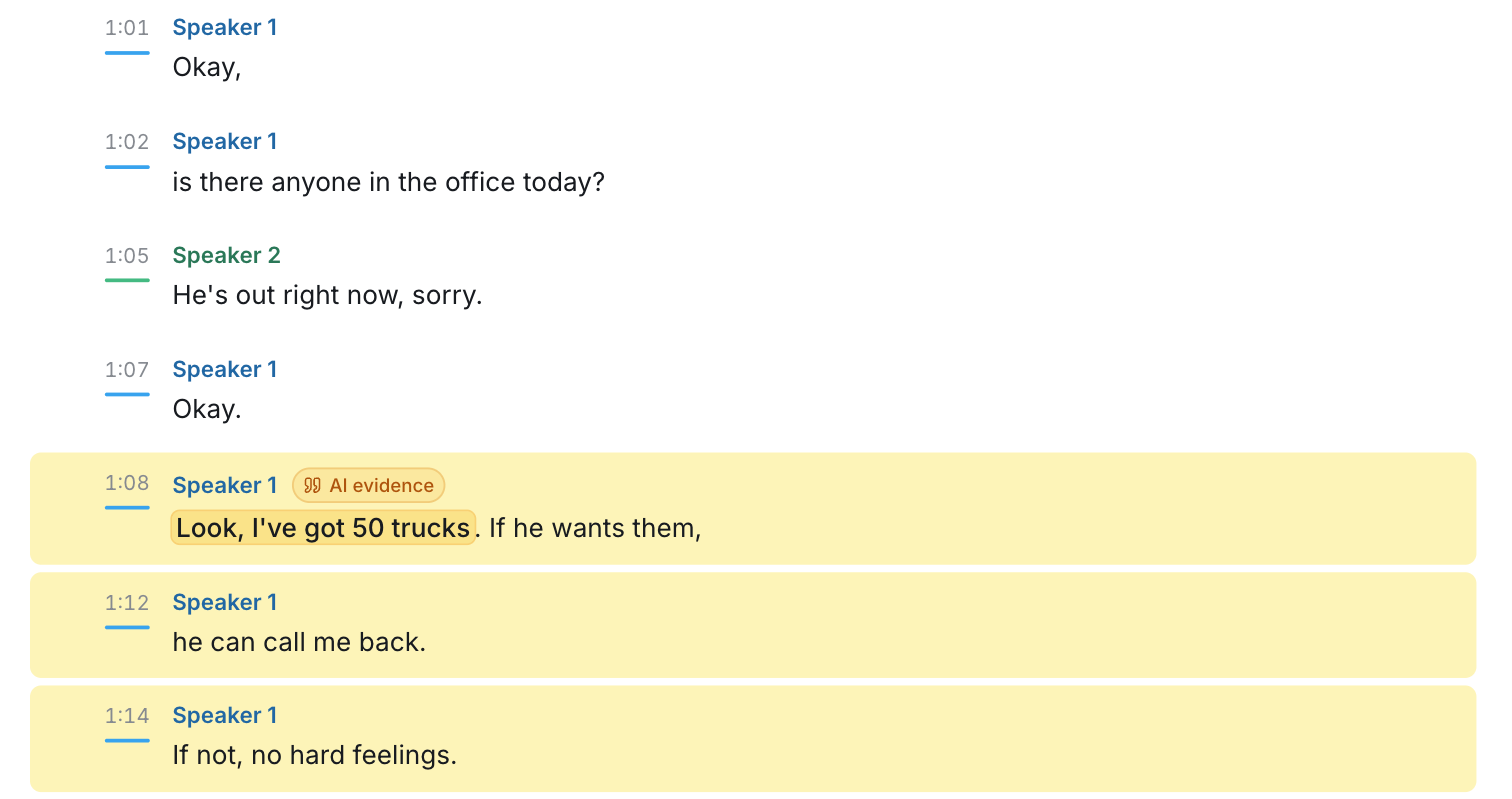
“Look, I've got 50 trucks. If he wants them, he can call me back. If not, no hard feelings.”
Nobody told the owner. By the time anyone phoned him, the fleet had gone to the yard down the road. At roughly $2,800 a truck in scrap, that's about $140,000.
We found out later, when we replayed old calls through the finished AI. That call lit up first:
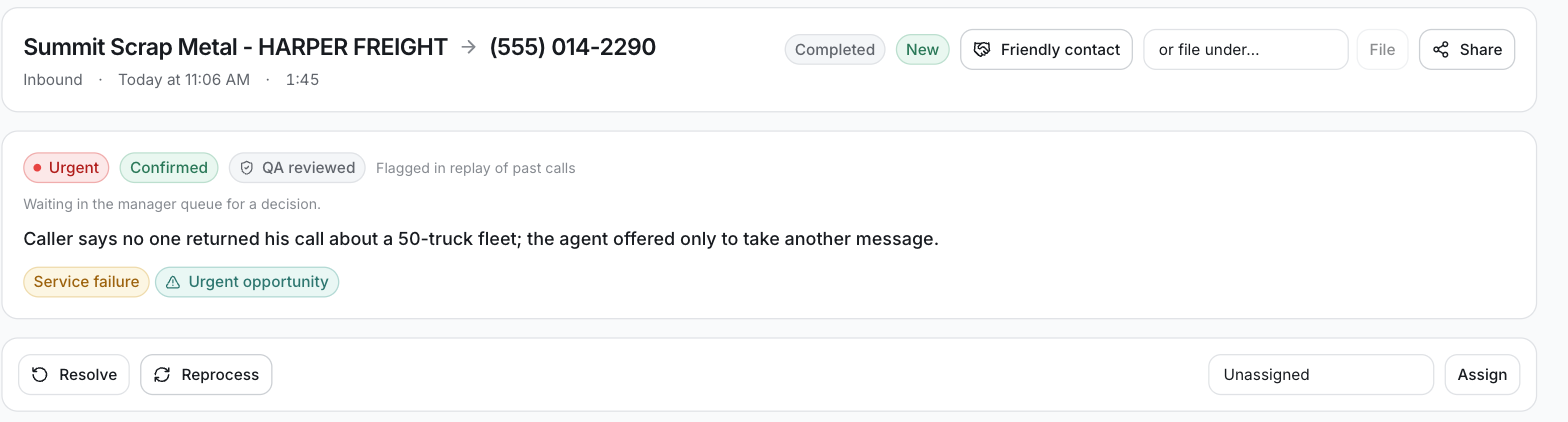
Flagged as urgent, with one plain sentence. The owner would have had a text on his phone within minutes. Instead he found out when it was already over.
What we built
An AI that reviews every phone call, the way a sharp manager would if he had time to listen to all of them.
After each call ends, it turns the recording into text and reads it against how that business runs: its prices, its rules, what a rep is allowed to promise. It looks for the moments where money or a customer slipped away: a big job left in a message, a promise nobody kept, a customer who got a “no” and no alternative. When it finds one, it flags the call and writes one plain sentence about what went wrong, with the exact words from the call.
Now it's running
A contractor called the dumpster company about a three-month project: 30 to 40 swaps. He asked if the company would waive the rental fee. The rep quoted the price, $695 per 30-yard, and said that was a question for the manager, who was out until Monday.
“By Monday this job could be gone.”
Same situation. Same missing manager. Same message on a desk. But this time the AI was listening.
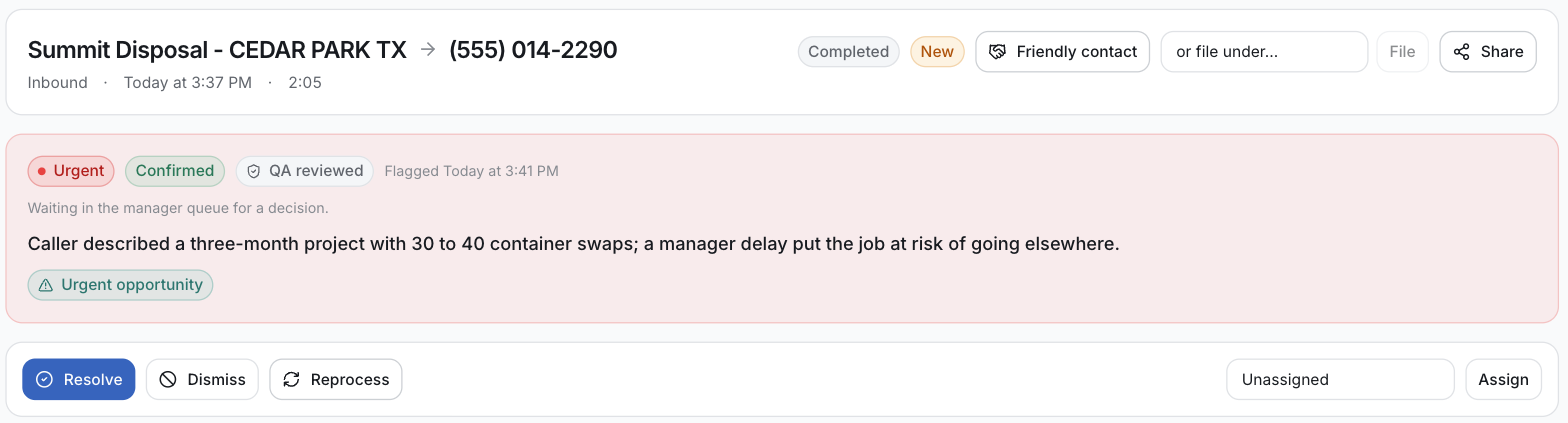
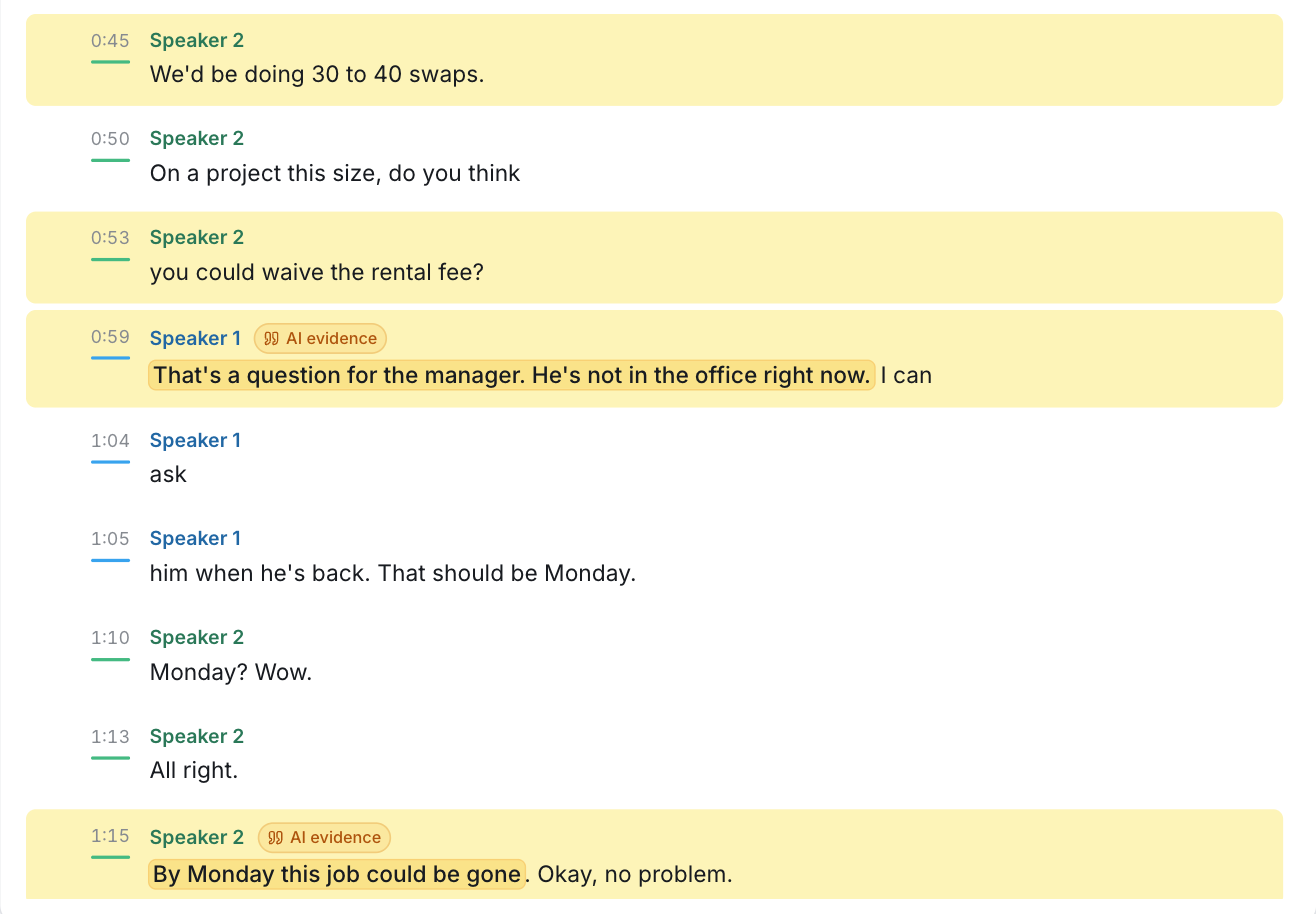
Within minutes it flagged the call as urgent, and this text landed on the owner's phone:
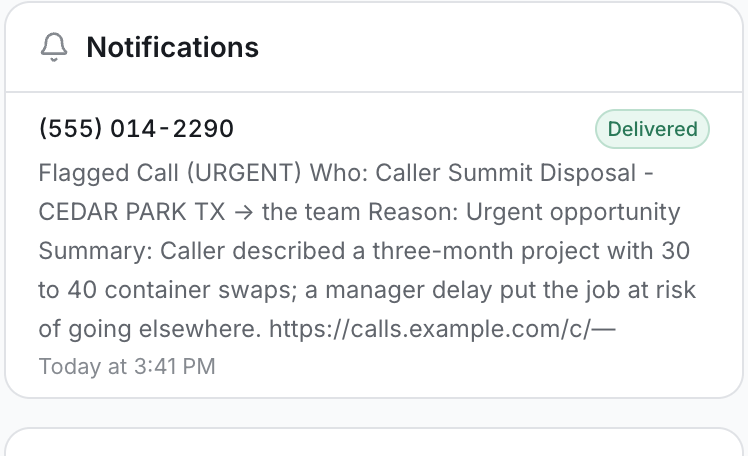
He called the contractor back that afternoon, offered a volume rate, and booked it. Thirty-plus swaps, over $20,000, instead of a missed message.
The result
$140,000 vs. $20,850
the job that slipped away, and the one that didn't
| Before the AI | With the AI | |
|---|---|---|
| The call | Fleet owner, 50 trucks | Contractor, 30 to 40 swaps |
| What happened | A message on a desk | A flag and a text to the owner |
| When the owner found out | After it was lost | Within minutes |
| The result | About $140,000 gone | Over $20,000 booked |
The AI doesn't answer the phone, make the offer, or drive out to the yard. It makes sure the owner finds out while there's still time to do something about it.
Steal this
Want to build this yourself? Here's everything I used. It works with any phone system that records calls. RingCentral is just the one this owner already had.
| The piece | What it does |
|---|---|
| Your phone system (RingCentral here) | Records every call and hands the recording over |
| pyannote | Turns each recording into text and tells the business and the customer apart |
| AI models from OpenAI | A fast, cheap one reads every call. A stronger one double-checks only the calls it flags. That's how the cost stays low |
| Twilio | Texts the owner the moment a call is flagged |
| Resend | Emails the summary |
The part that takes the most work is teaching it your business: your prices, your rules, and what a rep is allowed to promise. Without that, it can't tell a lost sale from a normal call. Running cost: under a penny per call.
Prefer not to build it? Have us do it for you.
Is your business in the same spot?
In 30 minutes we'll look at your version of this problem and how an AI system could handle it for you.
Book a 30-minute consult, $99