Wholesalers: the instant cash offer that cut home seller leads from $80 to $15
Real estate wholesalers running paid ads: every competitor's page asks homeowners to fill out a form and wait. This one put a cash offer for their house on the screen in 10 seconds, and a Facebook lead dropped from $80 to $15.
Based on a real project. Names, details and figures changed for privacy and illustration.
The business
For: real estate wholesalers running paid ads to find homeowners who want to sell.
The short version: a wholesaling company was paying about $80 for every home seller lead on Facebook and about $200 on Google. I replaced the usual “fill out this form” page with an instant cash offer for the house, on the screen in 10 seconds. Facebook leads dropped to about $15. Google leads dropped to about $80. And the homeowners booked their own calls.
The company buys houses straight from homeowners. Everything runs on paid ads, so what a lead costs decides whether the month makes money.
The problem
Every wholesaler's ad says the same thing:
“Get a cash offer.”
Then the homeowner lands on a form, fills it out and waits for a call. They do that with five buyers and talk to whoever calls first. You pay $80 to $200 to be one of five names on their list.
The problem isn't the price you'd offer. It's that you look like everyone else, and you make the homeowner wait.
What we built
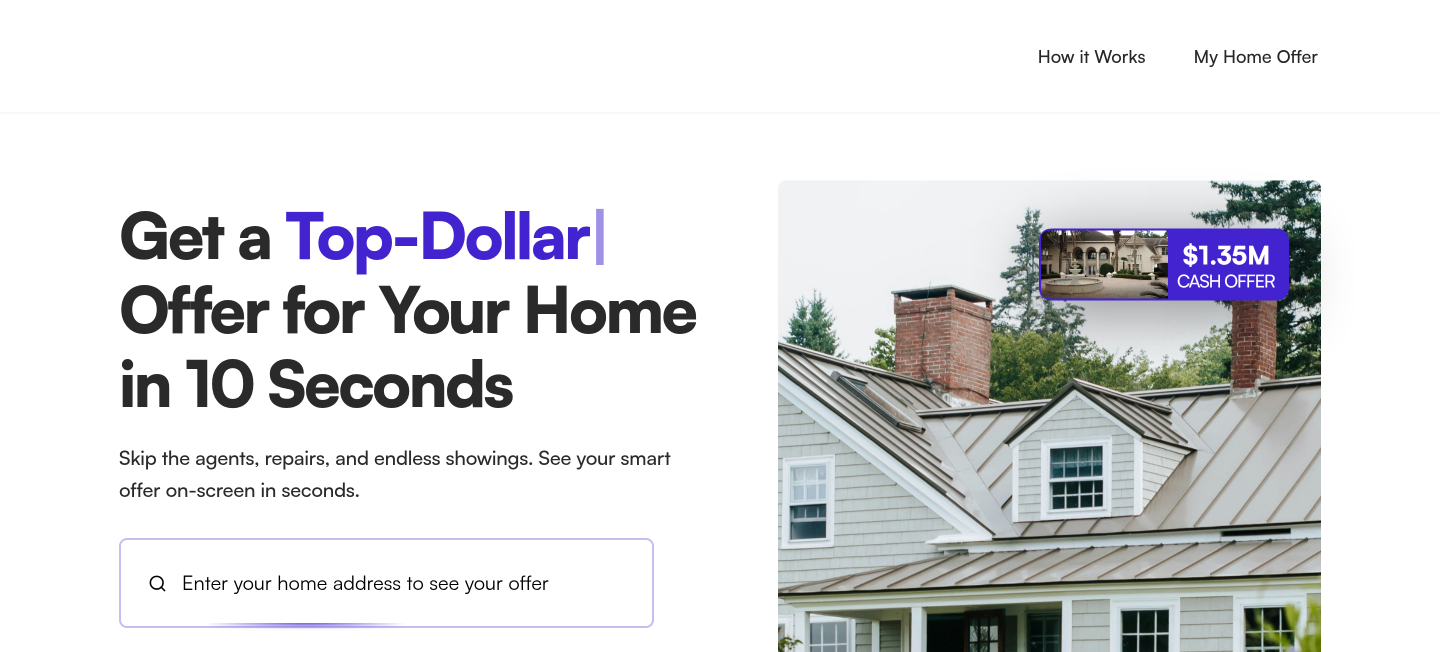
I built them the ultimate bait: an instant cash offer. A homeowner types in their address and sees a cash number for their house on the screen in about 10 seconds. No form first. No waiting for a call.
Here's the whole thing, in four steps.
Step 1: the address
That's the whole form.
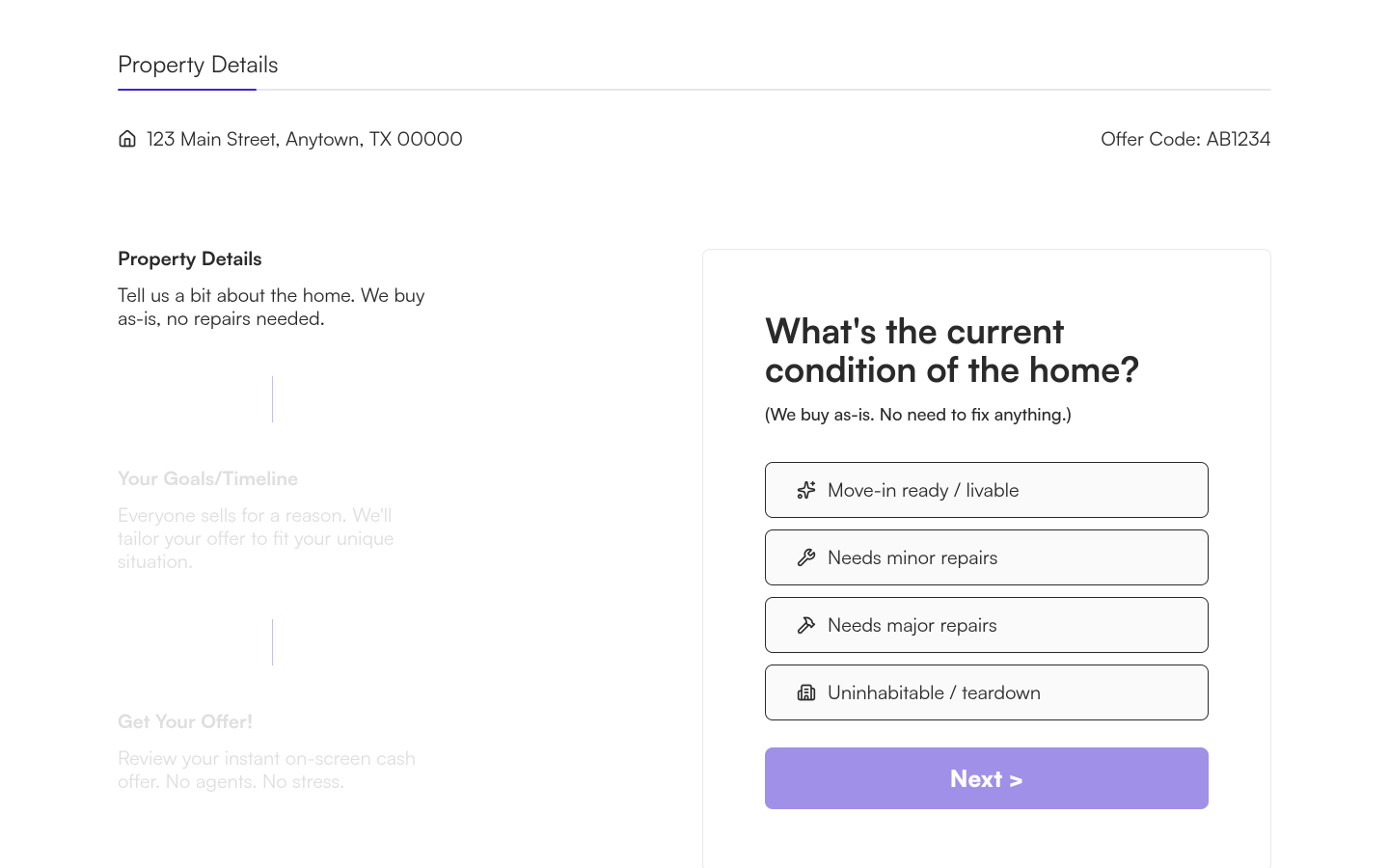
Step 2: one question about the house
How is it, from move-in ready to teardown? “We buy as-is,” so nothing needs fixing first.
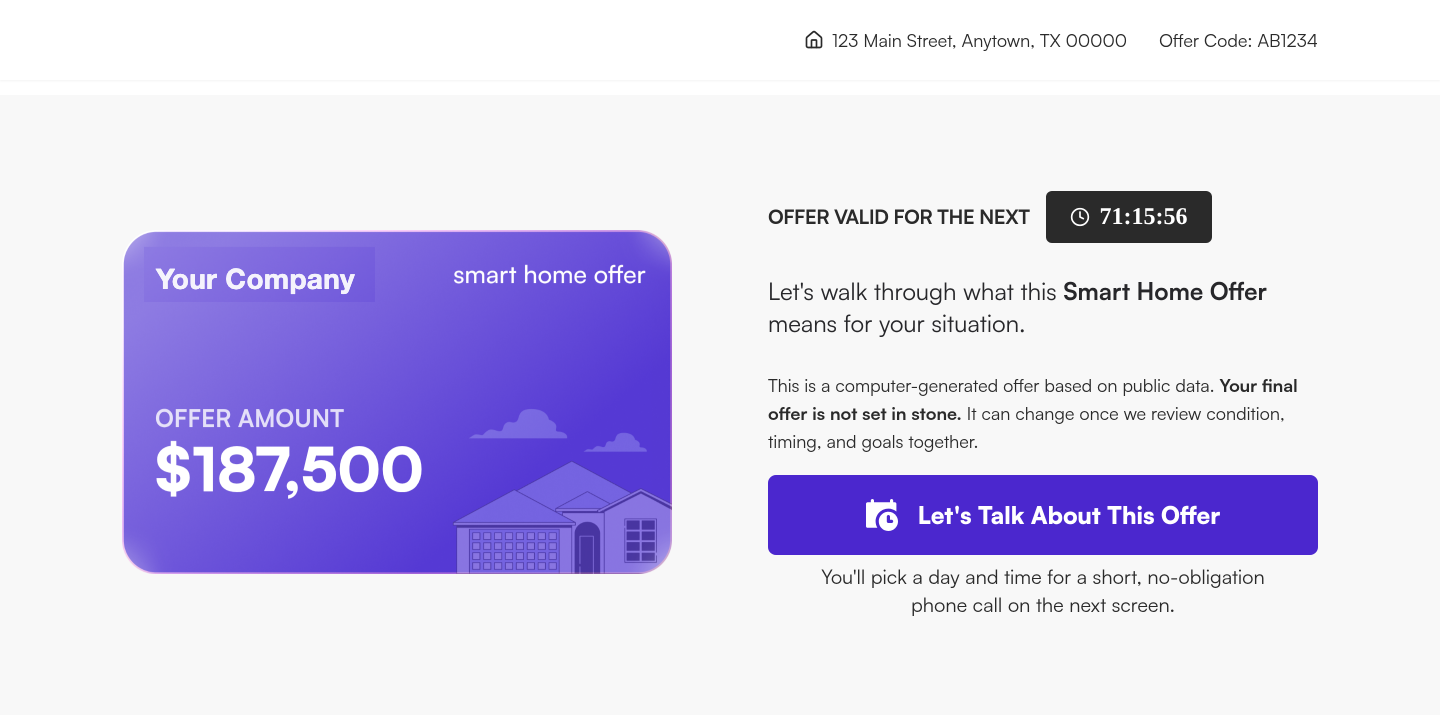
Step 3: the offer
A cash offer appears on the screen, with a countdown clock. The page says plainly that it's a computer-generated estimate from public data, and that the final number isn't set in stone.
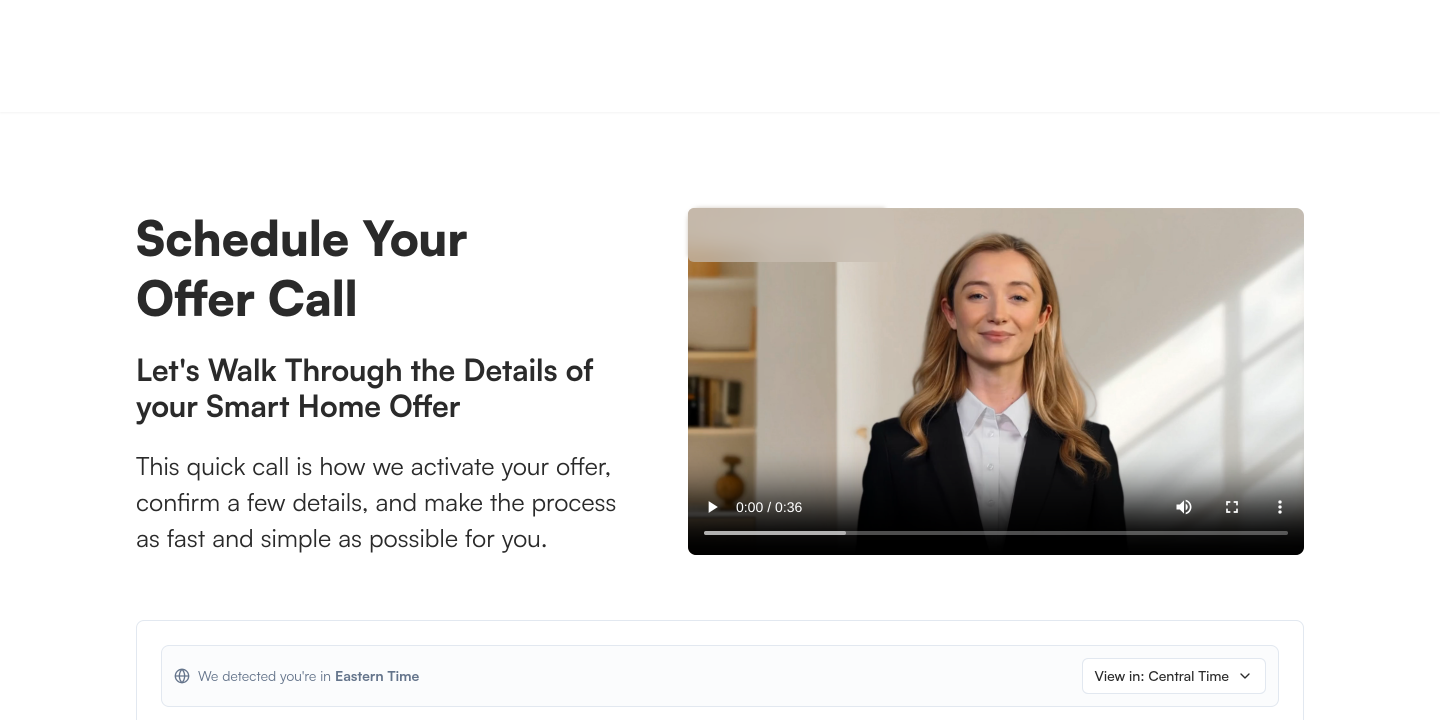
Step 4: the call
One button leads to a short call. The homeowner picks the day and time themselves.
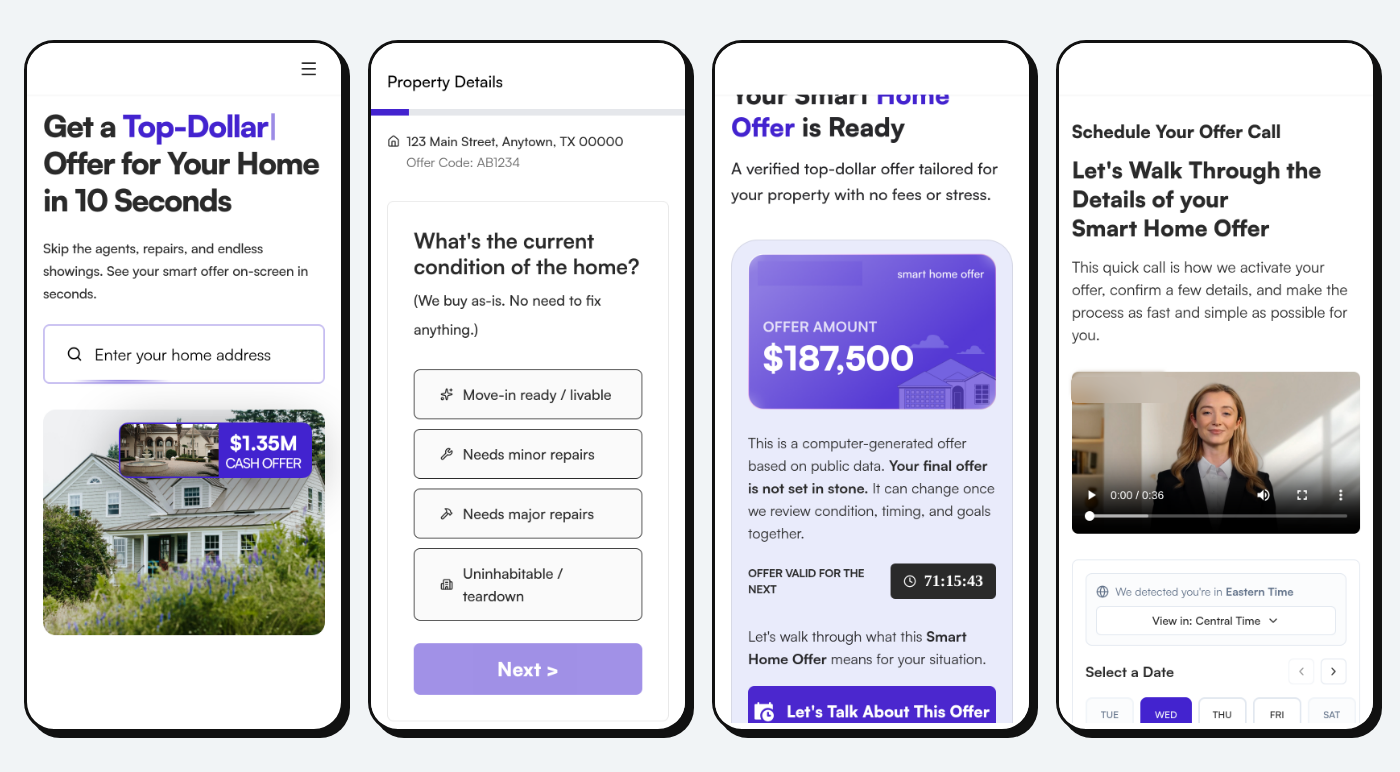
Ten seconds. One question. A number on the screen.
Why it works
Your ad stops looking like everyone else's. Their ads say “Get a cash offer.” Yours says “Your offer in 10 seconds.” More people click, and when more people click, the ad platform charges you less for each click.
Fewer homeowners leave. A seller who can see the answer is one step away stays on the page.
You win back the homeowner who's already leaving. They sent their details to two other buyers and were about to close the tab. “Instant offer” brings them back to do yours too.
You get their contact details at the best moment. They're interested right now. You have a reason to call, instead of hoping they pick up later.
The local competition can't match it. One or two of the biggest national brands had something like it, and they barely advertised in these markets. Everyone else was stuck with the same form.
“But what if the number is wrong?”
It almost always was, and that was fine. It's a computer-generated estimate from public data, nobody has seen the house, and the page says so.
The goal was never a perfect number. The goal was the contact details and a conversation. If a homeowner ever accepted the number on the spot, we'd bid too high. If it came in low, it set a starting point, and every dollar the real offer adds on the call looks like a win to the seller.
How the number gets built
A good offer isn't one guess. Before anything goes on the screen, the system breaks the deal down the way an investor would, to see which kind of deal actually fits this house and this seller:
- A cash flip? Buy it, fix it, sell it.
- A novation? Sell the house for the owner and keep the difference.
- Seller financing? The owner acts as the bank.
- Subject-to? Take over the payments on the existing mortgage.
AI pieces the property facts and the homeowner's answers together, works out which of those options are possible and which is the best approach, and the offer is built on that. The homeowner just sees a number. Behind it, the deal has already been thought through.
What happens after the offer
Whether they accept it, decline it or ignore it, the next step is the same: book a call. Most people picked their own time, which meant a lot less chasing.
If they didn't book, the follow-up went out right away:
“The number may be a little low because a computer made it. Let's get a person on the phone and talk about how we get it up.”
We live in an instant-gratification world. People don't want to wait for a call. They don't want to submit a form and wait. They want it now. You still have to talk to them and work out the deal, but that's easy once you have their contact details. You can't do it if they never submit.
If you run paid ads for seller leads, ask one question: when a homeowner clicks, what do they get? If the answer is “a form,” this is the first place I'd look.
The result
$80 to $15
what one home seller lead cost on Facebook, after switching to an instant cash offer
| Before | After | |
|---|---|---|
| Facebook cost per lead | About $80 | About $15 |
| Google cost per lead | About $200 | About $80 |
| Clicks on the ad | Same as every competitor | Up |
| Leads | What $80 to $200 buys | Many more, for less money |
| Booking the call | The team chased | The homeowner books it |
Cheaper leads, and more of them. For a company buying houses from paid ads, that went straight to the bottom line.
Steal this
Want to build this yourself? Here's how it was built, in plain words.
| The piece | What it does |
|---|---|
| Claude Code | Builds the whole thing: the page, the offer logic, the follow-ups and the booking |
| A property data service, like BatchData | Look up an address and get the public facts about the home in seconds |
| An AI model | Reads the facts and the homeowner's answers, works out which deal fits (cash flip, novation, seller finance, subject-to) and builds the offer on it, using the buyer's own price rules |
| Twilio | Texts the offer and the follow-ups right away |
| Resend | Emails the offer and the follow-ups |
| Any booking calendar | Lets the homeowner pick a time for the call. We built our own, but Cal.com or Calendly work just as well |
The part that takes the most work is teaching it the buyer's rules, so the number lands where the company can actually buy.
Prefer not to build it? Have us do it for you.
Is your business in the same spot?
In 30 minutes we'll look at your version of this problem and how an AI system could handle it for you.
Book a 30-minute consult, $99