
One-size-fits-all software is dead. An AI built this towing company's own system in weeks, not months.
For owners who quote or invoice by hand, run on tools that do not talk to each other, or keep a spreadsheet next to the software they pay for. One heavy-duty towing company, and the custom software an AI built around how they work, in weeks, not months.
Based on a real system. Names and client details changed; screens show sample data. Counts and times are rounded. Results vary; this describes one company’s system.
The business
Quoted by hand.
Invoiced by hand.
Tools that did not talk to each other.
No pickup or drop-off times.
Invoices got missed.
Collecting was painful.
The software did not fit.Then an AI built one system around the business. In weeks, not months.
Nobody runs the average business, and software gets built for one anyway. You pay for a pile of tools each month. They do not talk to each other, so you keep a spreadsheet next to them to hold it together.
One-size-fits-all software is dead. The reason to settle for it is dead. It was rarely the best fit, just the affordable one. Building your own used to take about six months and 10 to 20 times the budget. Here it took weeks, not months, and most changes since took a day or less.
Do the math on doing it by hand
Illustration, not a result. Say you do 5 tows a day, 5 days a week, and spend 25 minutes a tow quoting, invoicing and chasing by hand: about 10 minutes to quote, 10 to invoice, and about 5 on average to chase the late ones. That is about 2 hours a day, or about 10 hours a week. About 13 work weeks a year (50 weeks of 5 days, 40-hour work weeks). Miss one $400 invoice a month and that is $4,800 a year. Example numbers: use yours. This system is built to take that work over. It is not a claim about what this company saved.
The problem
The software was basic, it did not fit, and the tools did not talk to each other.
The company tows heavy equipment, such as excavators, loaders and lifts, not cars. As it was described to me: quotes were done by hand, the office struggled to quote, invoices got missed, collections were painful, there were no pickup or drop-off times, and the tools they used did not talk to each other.
One-size-fits-all software is built for the average business, so it rarely fits yours. Where it does not fit, there is no box for how you really work, so people end up working around it: a spreadsheet beside it, a note on a desk, a phone call to check what a driver did. And when each step lives in a different tool, someone often has to carry the data from one to the next by hand.
What we built
One system, built around how they work
One system, so the quote, the job, the driver’s steps and the invoice live in one place and are not retyped from one tool into another. One website, three views. Customers get a free quote and book. Drivers work the job on a phone. The office dispatches and invoices.
How the system prices a tow for their customers
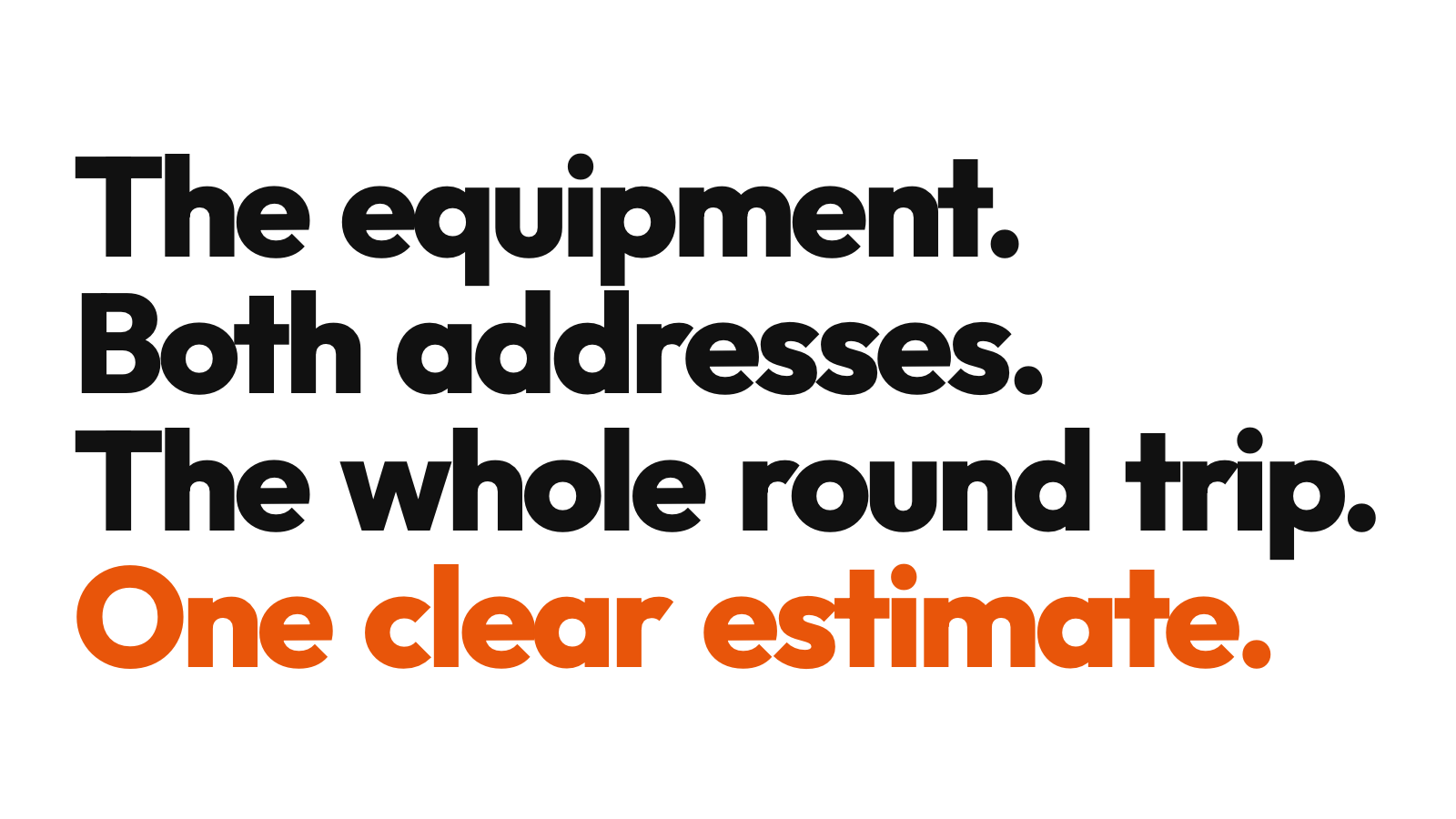
When one of the company’s customers asks for a tow, the system works out the price of that tow. It asks what heavy equipment is being towed, takes both addresses, and prices the truck’s whole round trip. The customer gets one clear estimate. That is the price of the tow, not the price of the software. Many quoting tools look a job up in a price table.
Each piece of equipment is saved once
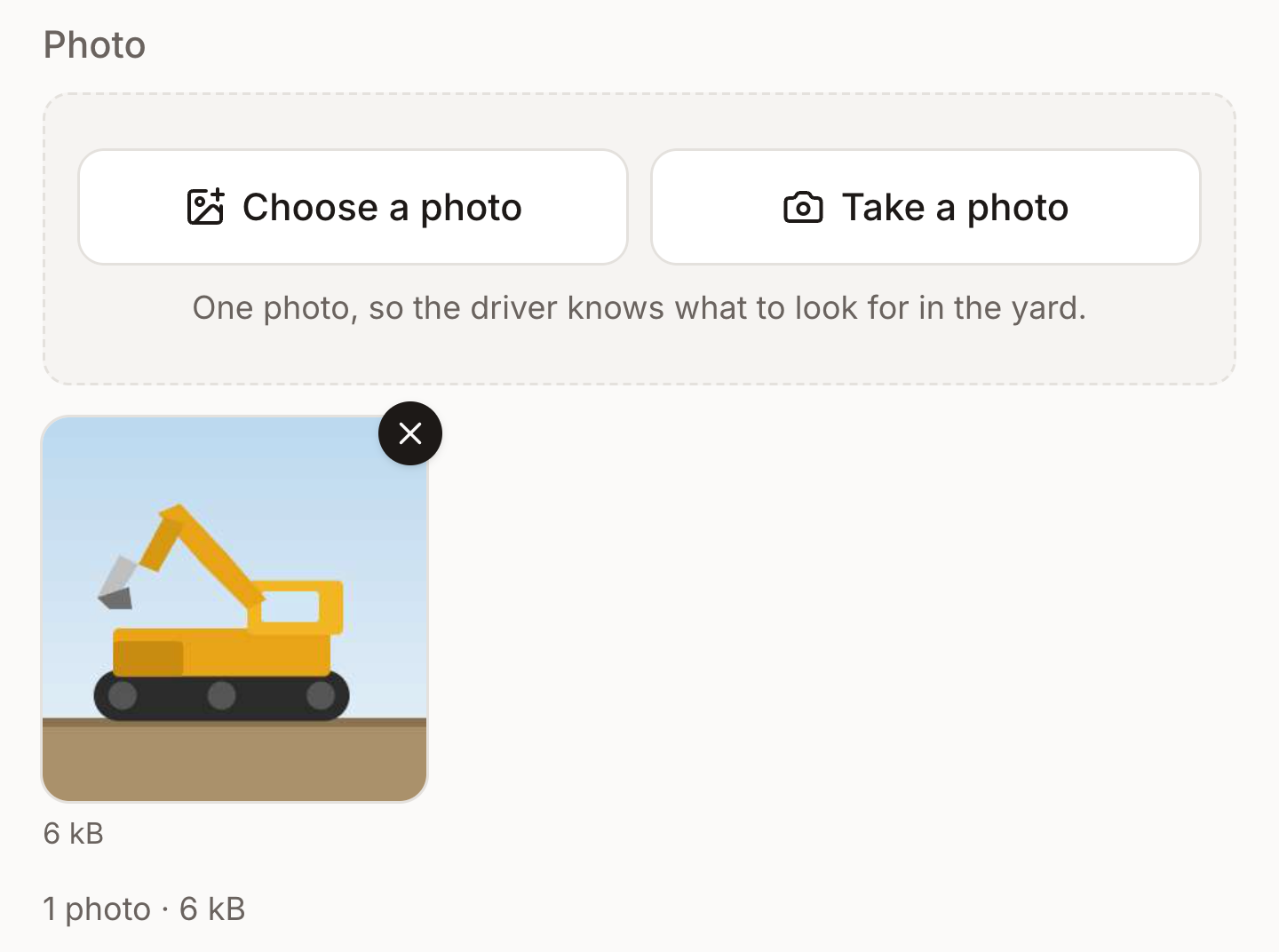
A customer or the office saves a piece of heavy equipment once, with one photo so the driver knows what to look for in the yard, and picks it again next time.
What matters in a business, and what changed
| Before | Now |
|---|---|
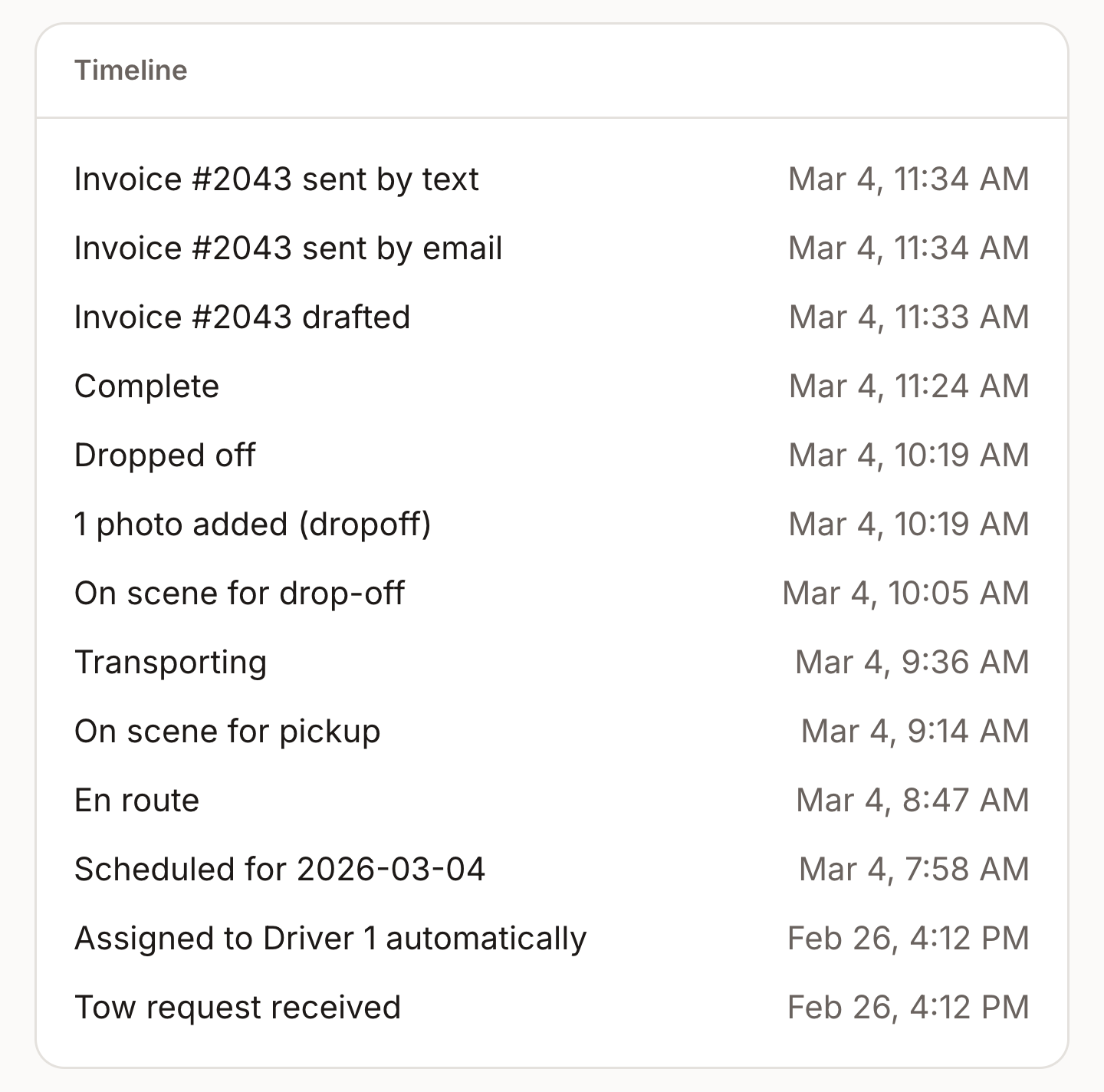
| Time. Quoted and invoiced by hand, in tools that did not talk to each other. | One system. A free quote, no account. The invoice is built from the job: drafted automatically, editable by hand, sent by text and email. |
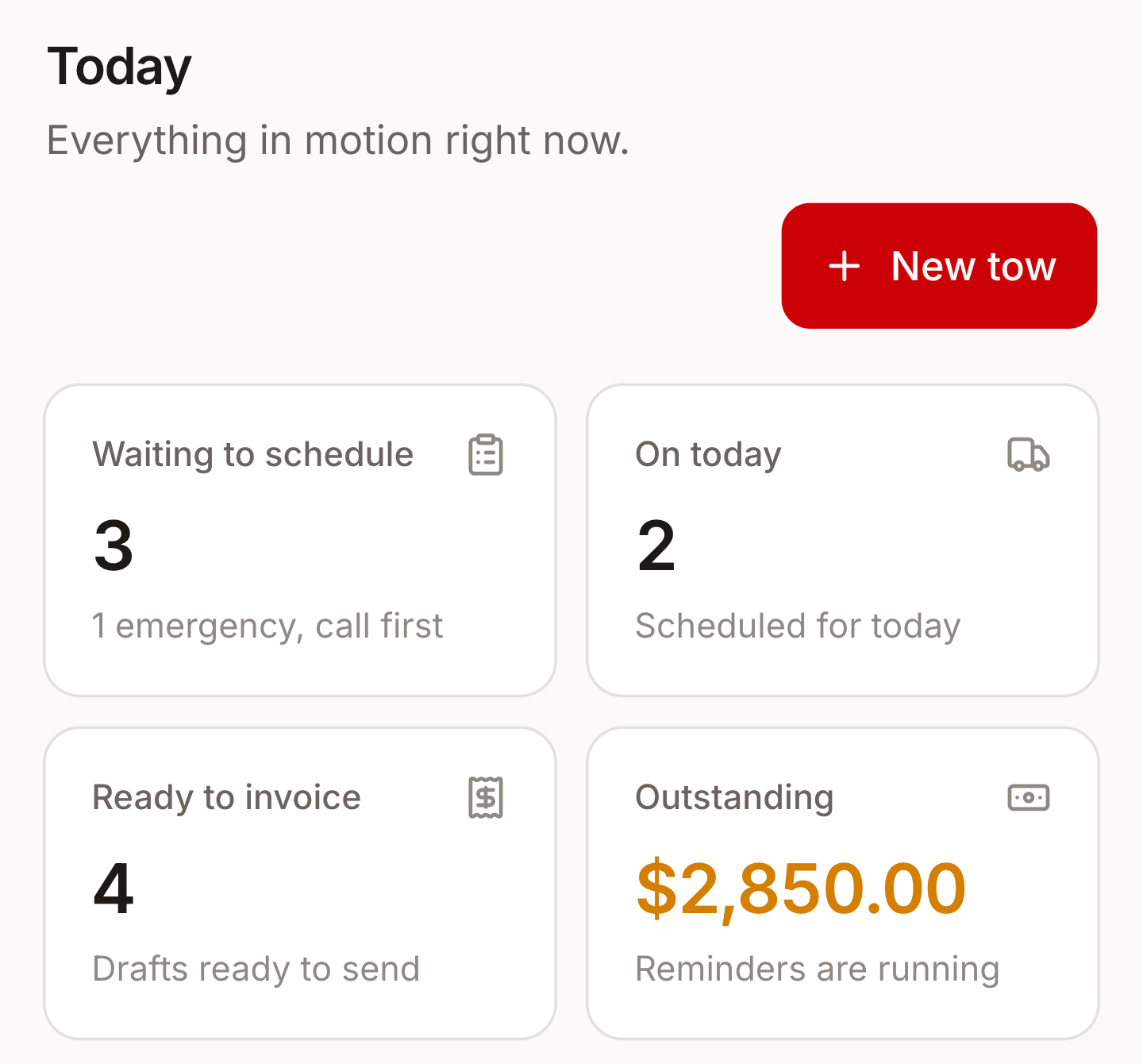
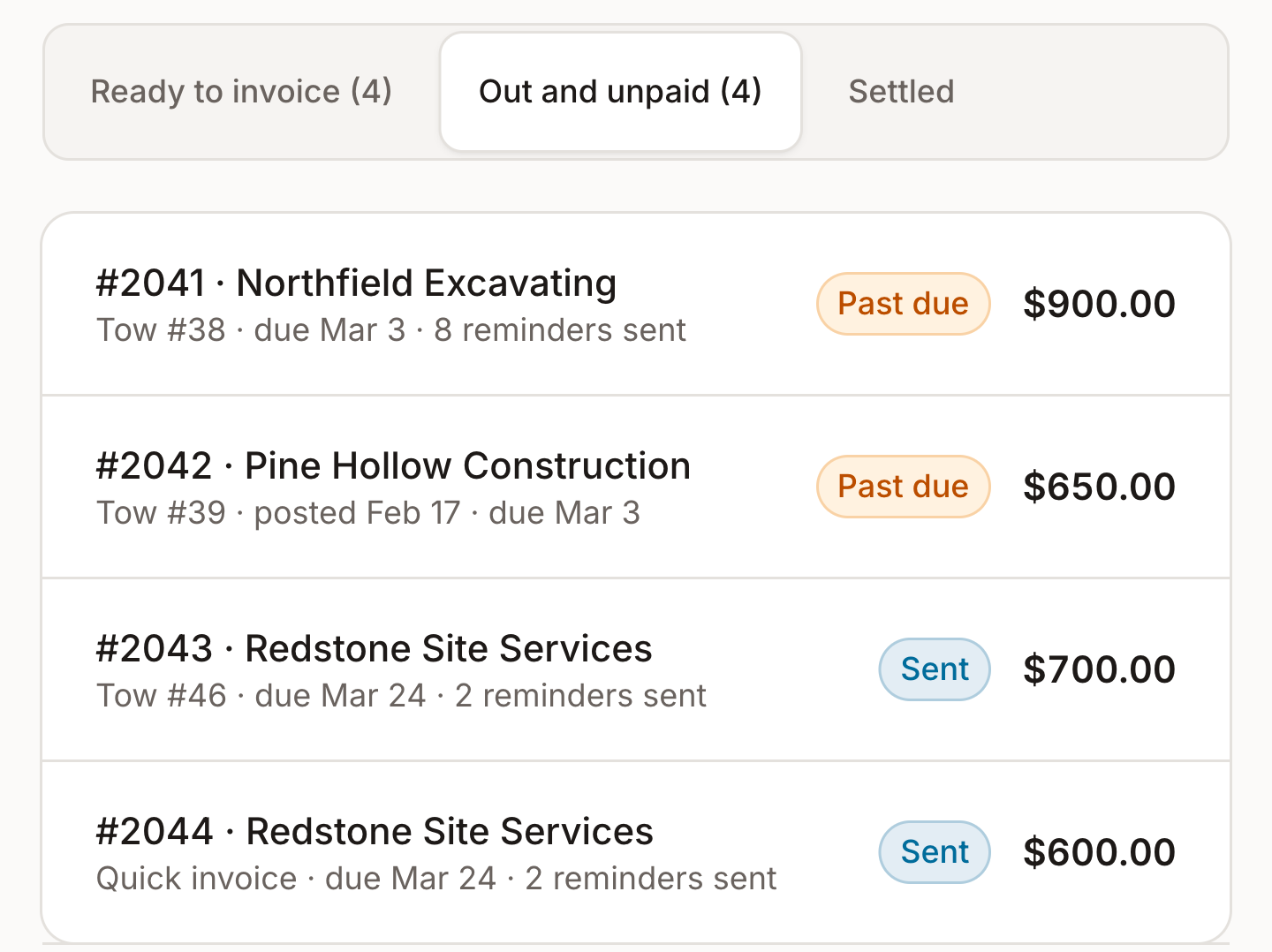
| Income. Invoices got missed. | The first screen counts jobs ready to invoice and money owed. |
| Cash. Collecting was painful. | Reminders and card payments are switched on. |
| People. The owner quoted by hand and the office struggled. | The pricing rules live in the system, not in the owner’s head. |
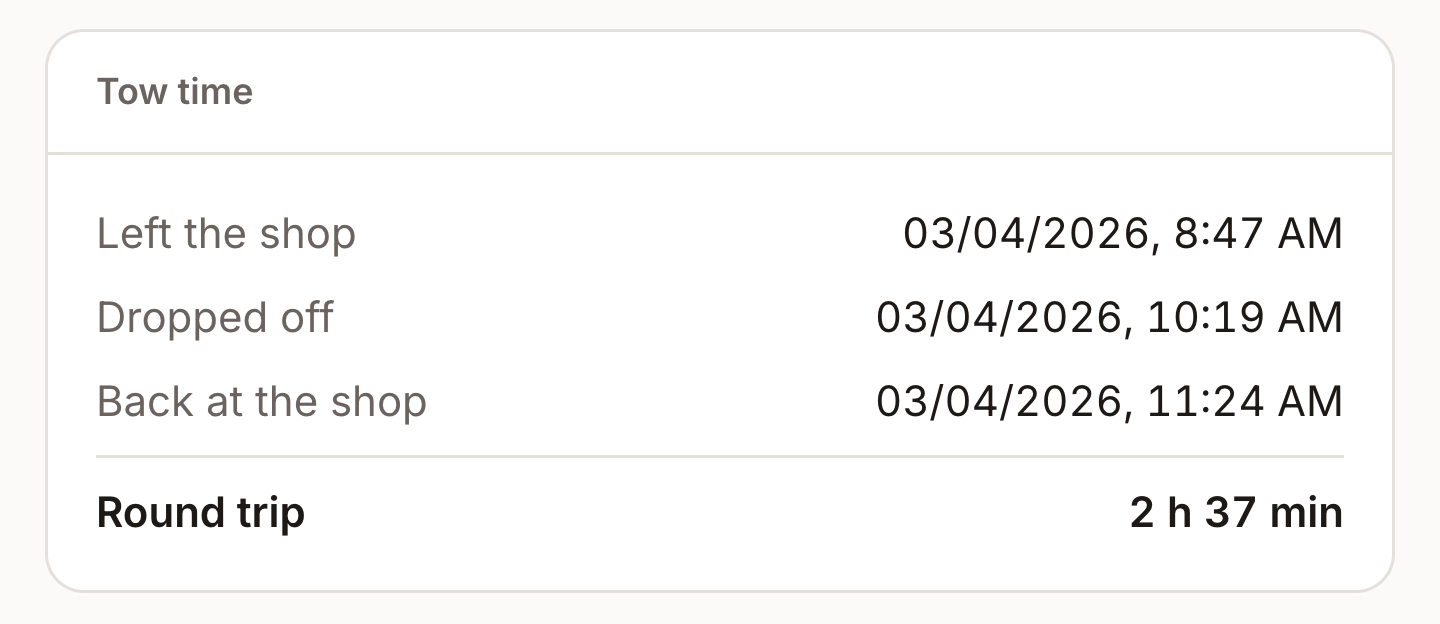
| Risk. No pickup or drop-off times. | Driver steps are time-stamped, with a drop-off photo. |
| Growth. Software that did not fit. | The business learns something and the software changes. |
Time. Income. Cash. People. Risk. Growth. Software built around your business works on all six, because it was built around all six.
The result
About 19 in 20 changes done within a day
More than 100 requests as it was built and tuned. A person files each one; an AI makes the change.
It keeps changing.
More than 100 requests went in as the system was built and tuned, and about 19 in 20 were done within a day. About 1 in 5 were done within 2 hours. Lately the changes are smaller: three of the last five took 30 to 75 minutes, one about a day and one about two days. A person files each request. An AI reads it, changes the system and runs the checks.
| Real requests, paraphrased | How long |
|---|---|
| A first version of a free-quote page with no personal details | About 45 minutes |
| Send invoices by email, by text or both | About 45 minutes |
| A Quick invoice button for a customer with no tow behind it | About 75 minutes |
This is one company’s system, not a promise about yours.
What to do with this
If you quote or invoice by hand, that is the first part to build.
If your tools do not talk to each other, pick the two you retype between most. Making them one system is the second.
If your software makes you work around it, write down the rule it has no box for. That is the third.
If you have no record of what your crew did, time-stamped steps and a drop-off photo are small, and they change what you can prove and bill.
Want a second pair of eyes on your first one? Book a 30-minute consult and bring the one thing you still do by hand.
What stays human: the owner’s judgment, the people who drive the trucks, and the decision of what to ask for next.
What do you still do by hand because your software has no box for it?
Steal this
Want to build this yourself? Here’s how it was built, in plain words. The idea works for any service business that bends to software built for somebody else. Custom does not mean from scratch: payments, maps and texts still come from specialist services.
| The piece | What it does |
|---|---|
| Claude Code | Builds the system and changes it when a request comes in |
| A web app with a database | One site with three views: customers, drivers and the office |
| Google Maps | Address suggestions, routes and the map of the day |
| Stripe | Card payments and card on file |
| A text-message service and an email service | Confirmations, invoices and reminders |
| A small server | Runs the whole thing |
The hardest part: writing your weird rules down as test cases first. The rule your software has no box for is the part that makes it yours.
Prefer not to build it? Have us do it for you.
Is your business in the same spot?
In 30 minutes we'll look at your version of this problem and how an AI system could handle it for you.
Book an AI opportunity audit, $249