
You paid for the lead. They typed an address and vanished. An AI got their number. +11% revenue.
If you run paid ads to a form that asks for an address, you pay for every address typed, finished or not. 23% of form submissions ended unfinished. For those, this AI looks up the owner and sends one message, and the deals it won lifted revenue 11%.
Based on a real project. Names, details and figures changed for privacy and illustration.
The business
A homeowner types their address into your form.
Then the dog barks, dinner is ready, and the tab closes.
You paid for that click. Your team will never know it happened.
The AI will. It finds who owns that house and sends them one message.
This is for you if:
- You run paid ads to a form that asks for an address, and plenty of people never finish it.
- You pay an agency for leads and nobody can tell you what happens to the ones with no phone number.
It works for any business whose form asks for an address: wholesalers, cash home buyers, roofers, solar, home services. It does not need to be an instant offer form.
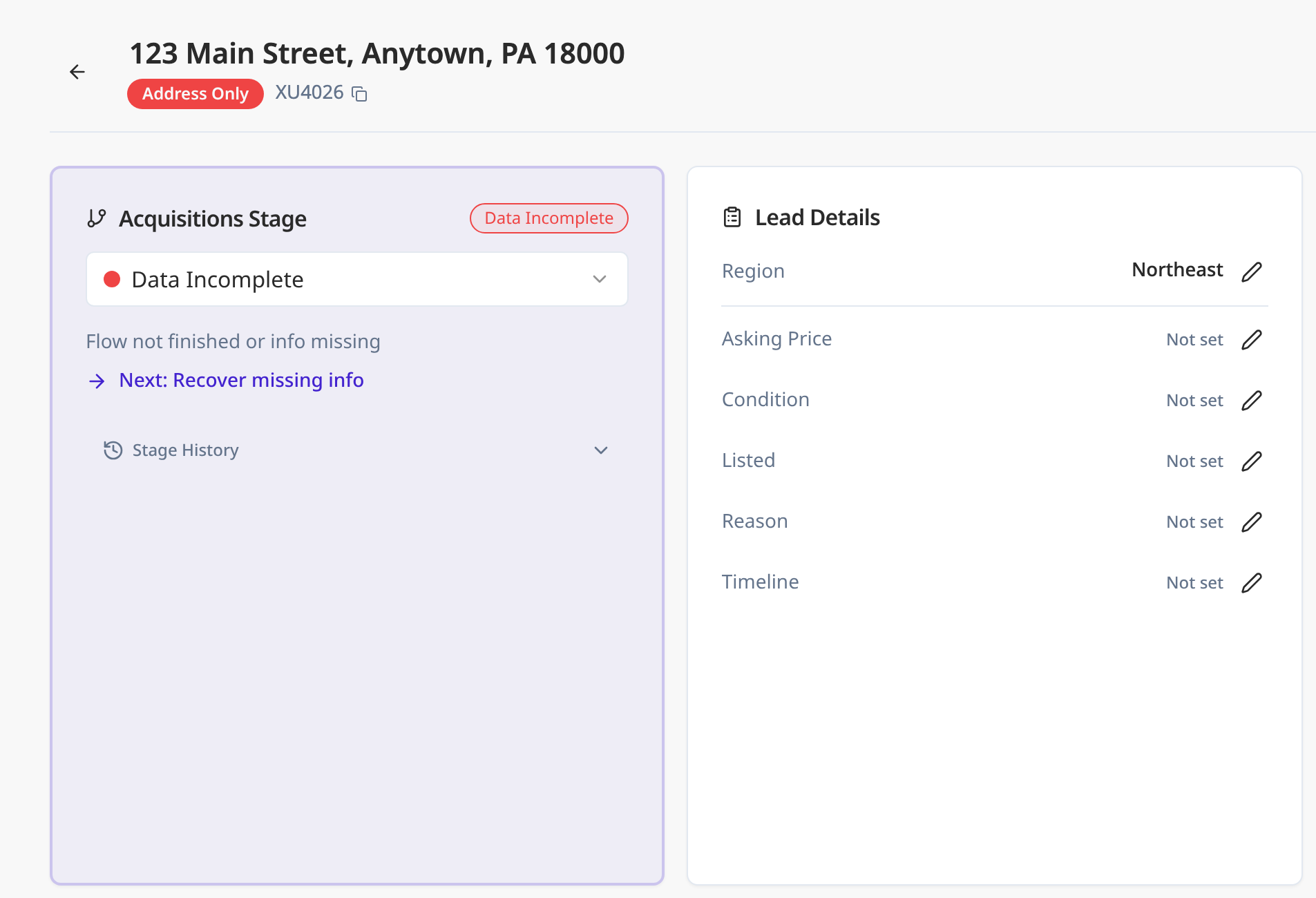
The example: a real estate wholesaler whose form starts with an address and ends in an instant offer. Day 2 got far more people into that form. This story is about the ones who walked out of it.
The problem
Your form opens with one easy question: what is your address? Then it asks for more. People drift away at every step. Some leave right after the address. Some leave halfway. Some leave one tap before the phone number.
Every one of them clicked your ad and typed their own address into your form. You paid for every one. And the usual answer is the same: a lead with no phone number is dead, so it gets thrown out.
In this form, 23% of form submissions ended unfinished. Almost 1 in 4.
Now do the math. Win back one of them and the cost per lead for the whole month drops. Win back the right one, and a single deal can pay for a month of ads.
What we built
So the wholesaler gave the system one job: never let a paid lead walk out quietly. It runs in the background, every day, on its own.
1. It follows every lead through the form
Each lead carries a stage: address only, halfway, or all the way to the last step with no contact details. If a lead has an address but nothing else after a set wait, the system marks it a failed capture.
2. It finds the owner. This is called a skip trace.
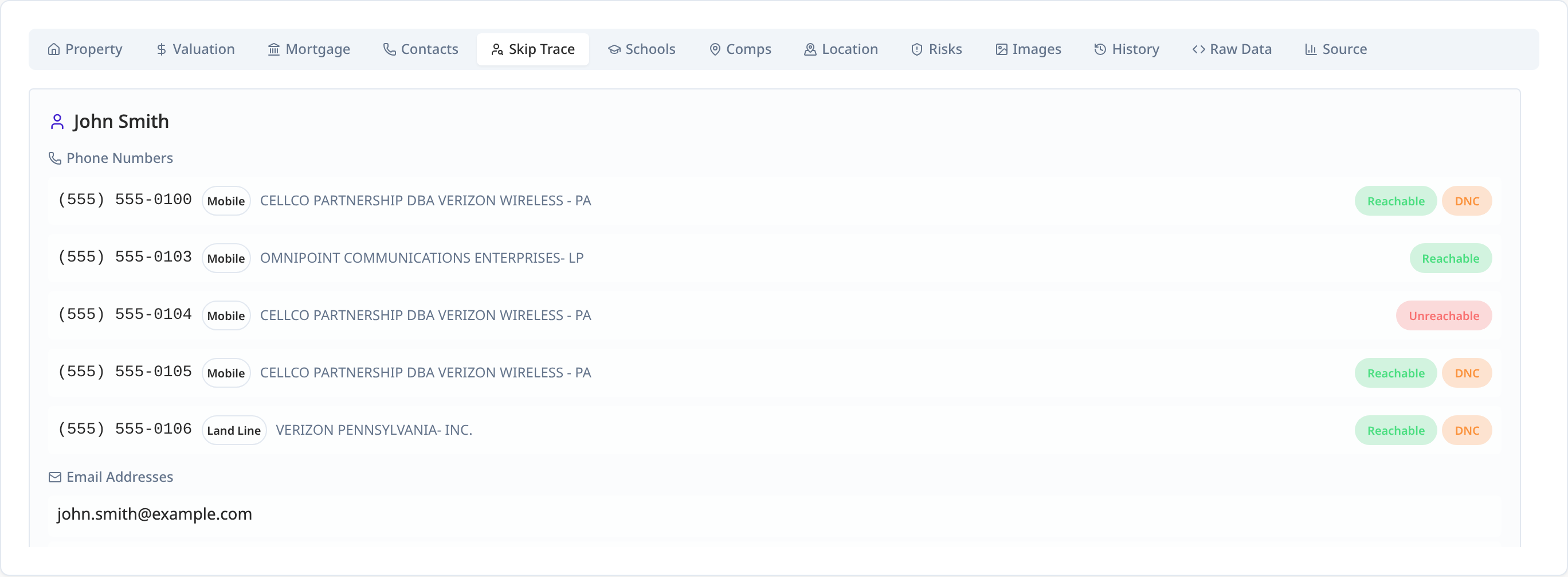
A skip trace is a lookup. You give a data company a property address, and it sends back who owns the house and how to reach them: names, phone numbers, emails. Investors use it every day to find owners.
Here the AI runs it the moment a lead is marked failed. One address in. One owner, five phone numbers and their emails out. It also flags what it finds: which numbers look reachable, which do not, which emails look risky.
3. It sends one message. Only one.
The AI texts the phone numbers and emails the addresses with a short, plain note: it looks like you tried to get an offer for your address, the form did not go through, are you still interested?
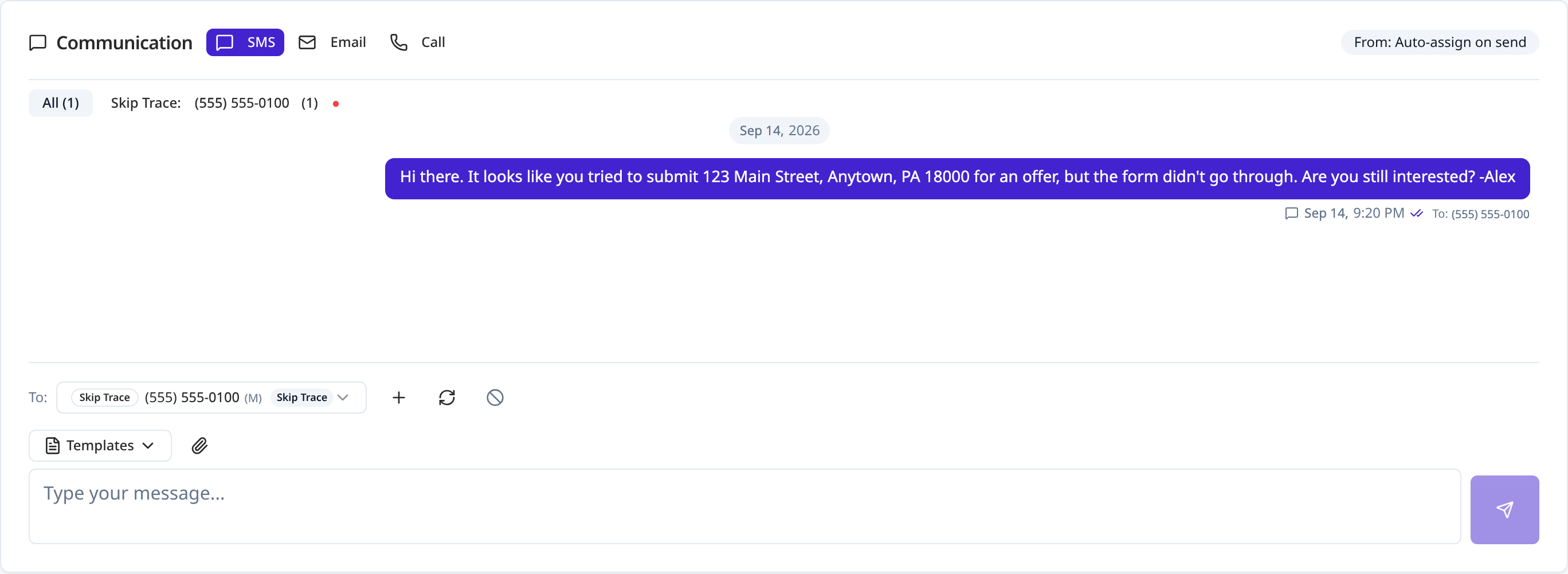
One text and one email. Never a second. This is a cold message to a stranger, so pushing is risky. Too many emails marked as spam and your emails stop landing for everyone, including your real leads. Too many people replying STOP and your texts stop going through. One message protects both.
4. It cleans up as it goes
If an email bounces, the AI marks it bad. If a number does not go through, it marks that bad too. Bad contacts are set aside, so nobody wastes a call on them.

5. It reads every reply
When someone writes back, the AI reads it. Is this a real seller with real interest, or a wrong number, a “who is this” or a “stop”? If it is real, the AI marks the lead complete, creates a task for your team and saves the phone number that answered. Everyone else never reaches your team.
6. Your team never sees the rest
Failed leads, bounced emails and wrong numbers stay in the background. Your team sees a lead only when it is real, with a task waiting.
Why it works
- You already paid for the click. Everything after it is nearly free.
- They raised their hand. They typed their own address into your form on purpose.
- One message keeps your sending clean. Your real leads still get through.
- It is lower intent, and it still pays. These people are cooler than the ones who finished the form. They still turned into deals.
What it changes for you
If you buy the ads yourself: your real cost per lead is not what Facebook says. It is what you paid, minus what you win back.
If an agency buys them: ask what happens to the people who start your form and quit. If the answer is “nothing”, that is the first fix.
The result
+11% revenue
from deals won on leads that used to be thrown away
| Before | After | |
|---|---|---|
| The 23% of form submissions that ended unfinished | Written off | Looked up and messaged once |
| Bad numbers and emails | Mixed in, wasting calls | Marked bad automatically |
| Replies | Nobody was there to read them | The AI reads each one, only real leads reach your team |
| Revenue | Those leads were thrown away | +11% from the deals that came out of them |
We did not win back everyone. 23% of form submissions ended unfinished, and we could still attempt to contact them. The ones that became deals lifted revenue 11%. Same ads. Same traffic. No extra ad spend.
Steal this
Want to build this yourself? Here's how it was built, in plain words.
| The piece | What it does |
|---|---|
| Claude Code | Builds it and keeps it running: the lead stages, the lookups, the one-time messages and the reply reading |
| A skip trace service, like BatchData or any real estate data service with skip trace | Address in, owner names, phones and emails out, with a flag on each number and email |
| Twilio, or any text service | Sends the one text and reports if a number fails |
| Resend, or any email service | Sends the one email and reports bounces |
| An AI model API (OpenAI or Claude) | Reads each reply, decides if it is a real seller, creates the task and saves the right number |
| A CRM (we built our own, or connect the one you already use) | Holds the stage of every lead, the contacts, the bad flags and the tasks |
| Hosting | Keeps it running in the background and behind a login |
The hardest part is the rules: how long to wait before a lead counts as failed, what counts as real interest in a reply, and holding the line at one message.
Prefer not to build it? Have us do it for you.
Is your business in the same spot?
In 30 minutes we'll look at your version of this problem and how an AI system could handle it for you.
Book a 30-minute consult, $99